
we can’t let another generation of kids slip into homelessness
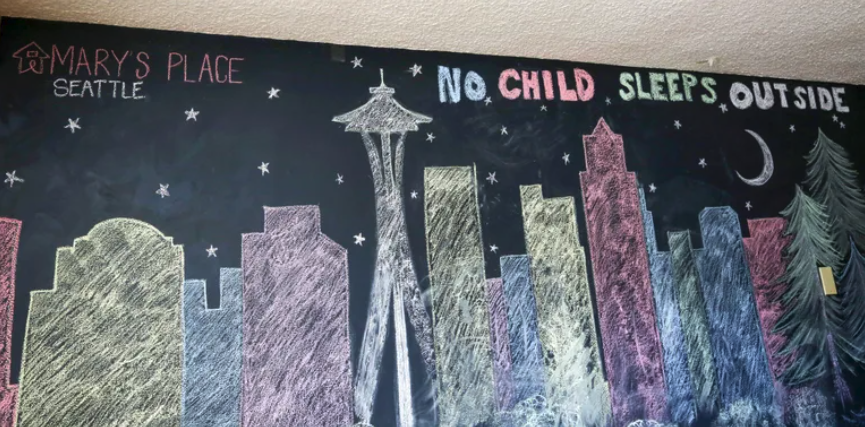
Sixty percent of the guests seeking shelter at Mary’s Place in Seattle are children under 18, writes the author.
(Ken Lambert / The Seattle Times, 2017)
An Op Ed for the Seattle Times by Dominique Alex, Mary’s Place CEO
The Seattle Times editorial board rightly sounds the alarm about families “hiding in plain sight” across our region, desperate for shelter that simply doesn’t exist. But the crisis is even more urgent than the editorial describes. (“Homeless babies and toddlers may be hidden now, but not for long,” Jan. 2, Opinion.)
At Mary’s Place, we operate the region’s largest family homelessness response system. What we’re witnessing isn’t just a policy failure — it’s a moral emergency. And the numbers tell a story far more dire than most people realize.
In their state-by-state count of infant and toddler homelessness, SchoolHouse Connections reports there are 13,876 children under 3 who are homeless in Washington. This is undoubtedly an undercount, as most families with children are hiding. Sixty percent of our guests are children under 18. These aren’t statistics; they’re newborns who should be bonding with mom, not sleeping in a tent. Kindergarteners who should be learning to read, not worrying about where they’ll sleep tonight. They’re teenagers who should be focused on algebra and basketball tryouts, not on keeping their family’s homelessness a secret from classmates.
The Times editorial cites 1,785 families seeking help. The reality? Our call center receives between 50 and 60 calls every single day from families desperately seeking shelter for the night — families with nowhere to go, calling again and again, hoping this time there might be space. Behind each of those calls is a parent trying to shield their children from sleeping in a car, a park or worse. Across our family shelter system, we only have room to bring in just one or two families a week.
The editorial correctly notes the social costs when homeless adults don’t receive adequate support. But if we genuinely want to break the cycle of homelessness, we must start with children. Research is unequivocal: Childhood homelessness creates trauma that echoes across lifetimes, affecting educational outcomes, physical and mental health, and future economic stability. Every night a child spends without stable housing multiplies these impacts.
We face a critical choice. Will we continue managing crisis after crisis, or will we finally invest in solutions that match the scale of the problem?
Gov. Bob Ferguson’s budget maintains current funding levels for family homelessness services. This is essential but insufficient. Maintaining the status quo means maintaining a system where thousands of families can’t access help, where shelter beds remain scarce and where our call center staff must deliver heartbreaking news to desperate parents day after day.
But there’s a path forward that’s both morally right and fiscally responsible: prevention.
Prevention services — rental assistance, legal aid, and eviction-prevention policy— cost roughly half as much as emergency shelter. Yet we chronically underfund these interventions, forcing families into crisis before help arrives. It’s the equivalent of refusing to fix a leak until the entire house floods.
We don’t have enough shelter beds even for families in crisis. Yet, we also aren’t adequately funding the prevention services that would keep many families from reaching that crisis point in the first place. We’re failing at both ends of the continuum.
The editorial calls for “more emergency shelter, more transitional housing, and more permanent supportive housing.” We agree wholeheartedly. But we must also significantly expand prevention services. For every family we prevent from entering homelessness, we preserve a child’s education, protect their mental health, and avoid the compounding and generational costs of trauma and instability.
As the Legislature considers budgets and new state and county leadership evaluate homelessness response strategies, there’s an opportunity to rethink how we approach family homelessness fundamentally. The current system isn’t just inadequate; it’s failing our most vulnerable residents at scale.
We need a comprehensive approach: Fully fund emergency shelter so no family that calls for help hears “no space available.” Invest in prevention, so families never reach crisis. Support rapid rehousing and permanent supportive housing, so families move quickly into stability. And ensure sufficient affordable housing exists to make that stability lasting.
The editorial board is right to demand action. But let’s be clear about what action means: not just maintaining inadequate funding levels but building a system capable of ensuring no child in King County experiences the trauma of homelessness.
Between 50 and 60 calls a day from desperate families. Thousands of children without a stable place to sleep tonight. A system that intervenes too late at too small a scale. We can do better. We must do better.
Dominique Alex: is the CEO of Seattle-based nonprofit Mary's Place.